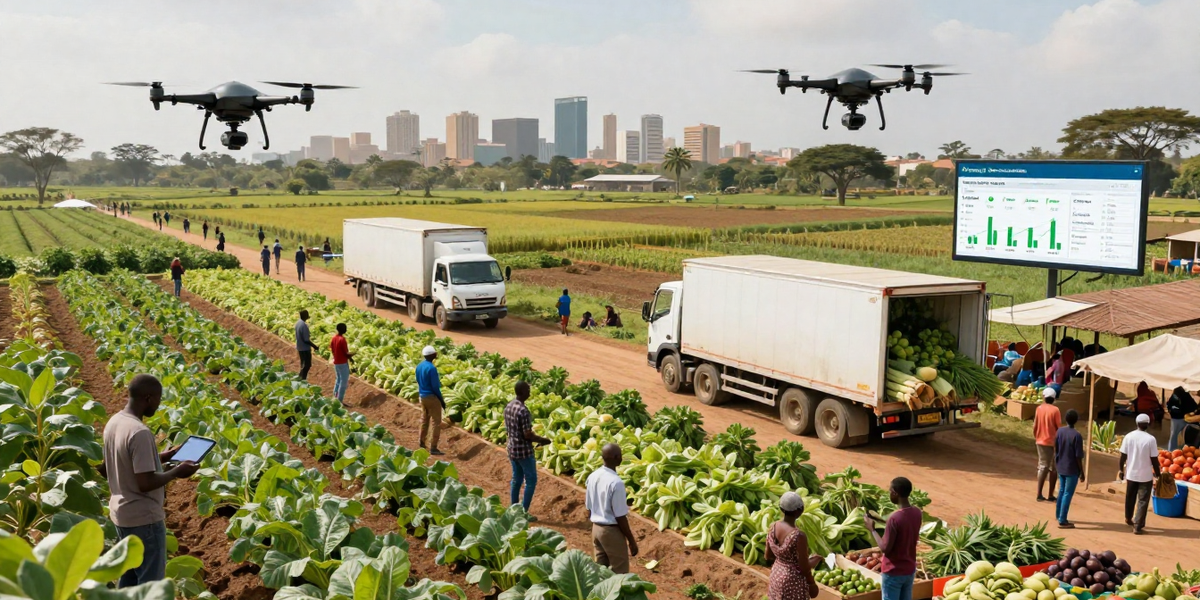
Companies Powering Africa’s Food Supply

Deborah Osifeso
Click to view profile
Across Africa, the beating heart of food supply is private enterprise. African private companies are rewriting agriculture, reshaping markets, and feeding communities.
From the fertile plains of West Africa to South Africa’s agritech hubs, firms are innovating with bold strategies, deep purpose, and fierce determination. This guide shines a spotlight on those leading firms in Africa powering food supply, inspiring awareness, and inviting action.
The Rise of African Food System Champions
Food security is a shared dream and urgent priority across the continent. The demand for nutritious food is rising as the population grows. At the same time, Africa faces logistical barriers, climate pressures, and investment gaps. Within this challenge lies opportunity, and enterprising African companies are stepping up to deliver food sustainably and profitably.
Today, companies combine technology, production, and distribution to fortify food systems. They connect farmers to markets. They scale farm-to-table solutions. They build bridges that make fresh food flow smoothly across borders. Their work matters economically and socially.
What Makes a Food-Driven Leader in Africa?
A leading firm in Africa in the food supply space typically:
- Innovates across production, processing, and distribution
- Aligns with local needs and cultural practices
- Leverages technology to boost efficiency and transparency
- Partners with smallholder farmers for growth
- Drives sustainable and resilient food outcomes
These qualities position African companies as key market players and global contributors.
Traditional Giants Anchoring Africa’s Food Supply
1. Olam International
Olam International began in Nigeria and has become a global agribusiness powerhouse. The company manages supply chains across cocoa, coffee, rice, and more. Its reach spans 60+ countries, connecting African producers with international markets. Olam’s presence underlines the depth of African private companies in the global food trade.
2. Flour Mills of Nigeria (FMN)
Flour Mills of Nigeria nurtures food security across West Africa. With roots dating back to 1960, FMN has diversified into flour production, food processing, and agricultural services. Its broad portfolio touches homes and markets daily, making it one of the most impactful private food companies.
3. Westfalia Fruit
Westfalia Fruit specialises in high-demand produce like avocados and mangoes. The vertically integrated company handles cultivation to distribution. This model ensures quality and consistent supply locally and abroad. Its sustainable practices reflect the future of agribusiness.
4. Johnvents Group
Founded in 2016, Johnvents Group has grown quickly across agriculture and manufacturing. It engages farmers with trading and processing solutions. Its expansion into commodities trade in East Africa reinforces its strategic portfolio.
5. Afrifarms Foods
Afrifarms Foods operates across the food value chain, from farm fields to packaged products. It emphasises quality produce, farmer training, and market access. The company is building supply networks that are both resilient and export-ready. Afrifarms Group
African Startups to Watch in Food Supply Innovation
Innovation is driving a revolution. African startups to watch are merging digital tools with food needs to transform supply chains.
Twiga Foods (Kenya)
Twiga uses mobile and logistics technology to link smallholders and food vendors. Its platform reduces waste and increases profits, supporting a faster food distribution network across cities.
Zowasel (Nigeria)
Zowasel’s digital marketplace connects farmers with local and international buyers. It brings market access, financing, and crop insights even to remote regions.
ThriveAgric (West Africa)
ThriveAgric enables farmers to access financing and inputs, strengthening food production capacity. Its growth shows the power of market leaders in Africa when financial tools meet agriculture.
AgroCenta and Winich Farms
AgroCenta links farmers to fair pricing and traceable markets, while Winich Farms enables direct distribution without costly middlemen. Together, they improve access and profitability for small-scale growers.
Aerobotics and iProcure
Tech-enabled firms like Aerobotics use drones to provide crop insights and enable precision farming. iProcure improves access to farm inputs across supply chains, building efficiency from the ground up.
Practical Tips for Entrepreneurs and Investors
1. Start with Local Needs
Success begins with understanding what communities demand and value.
2. Leverage Partnerships
Supply chains are complex. Collaborate with logistics firms, tech startups, and financial platforms.
3. Invest in Data Tools
Use analytics and mobile tech to forecast trends and reduce risk.
4. Focus on Quality
Consumers choose quality. Food safety and nutrition standards attract loyal buyers.
5. Scale Responsibly
Growth is good, but sustainable scaling ensures lasting impact.
Understanding African private companies powering food supply deepens appreciation and opens opportunities. Whether you’re an entrepreneur, investor, or curious reader, there is much to explore. Visit our website for more.