
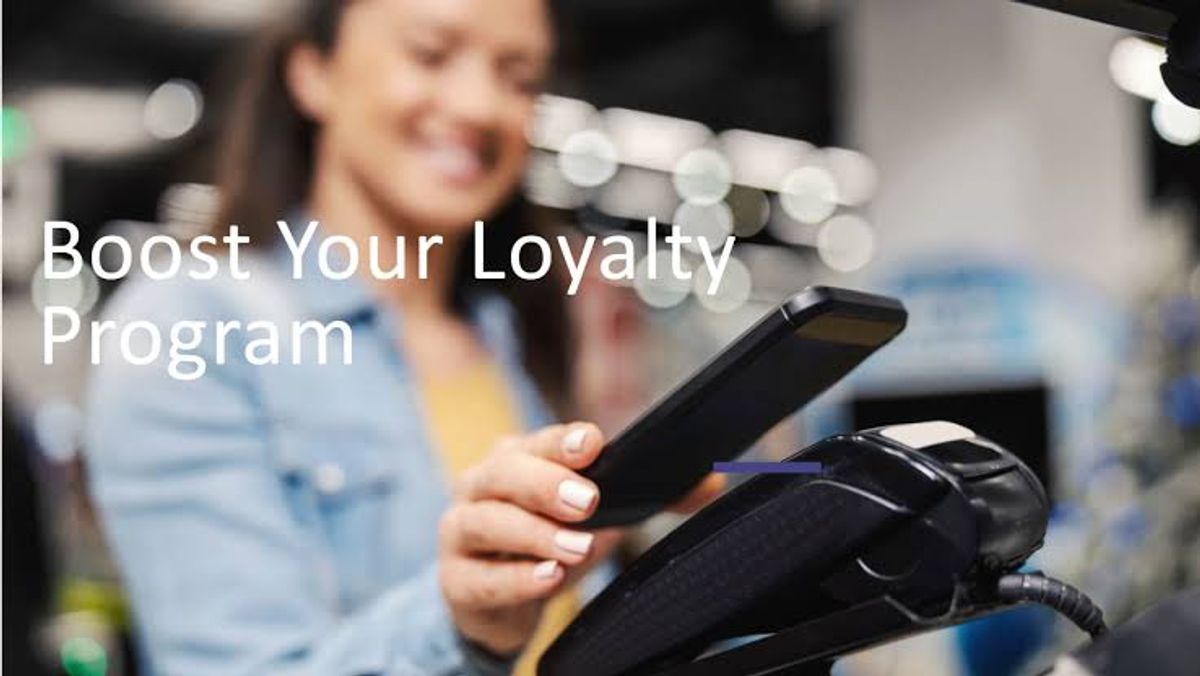
Customer Loyalty Programs are proven to drive repeat purchases and long-term revenue. Discover how to build one that keeps your best customers coming back always.
Customer loyalty programs are one of the most commercially proven tools available to businesses that want to reduce customer acquisition costs, increase purchase frequency, and build the kind of brand relationships that competitors find genuinely difficult to disrupt regardless of the promotions or pricing they deploy.
The fundamental commercial logic is straightforward: acquiring a new customer costs significantly more than retaining an existing one, and customers who feel genuinely valued by a business spend more per transaction, refer others more readily, and remain loyal through competitive pressure that would dislodge customers with no established relationship to the brand.
Yet most businesses invest far more of their marketing budget in acquiring new customers than in systematically rewarding and retaining the ones they already have. This imbalance consistently produces higher customer acquisition costs, lower customer lifetime values, and revenue patterns that require perpetual new customer generation to sustain rather than compounding naturally through the retention of a growing loyal base.
The Commercial Case for Customer Loyalty Investment
Understanding why customer loyalty programs produce measurable commercial returns requires an honest engagement with the economics of customer acquisition versus retention. The cost of attracting a new customer through paid advertising, promotional discounts, and sales conversion effort consistently exceeds the cost of keeping an existing customer engaged and purchasing through a well-designed loyalty program.
The customers who stay also spend differently from new customers, with higher average transaction values and broader product range exploration that increases their total commercial contribution over time.
Bain and Company's customer loyalty research documents that increasing customer retention rates by just five percent produces profit improvements that significantly outpace equivalent improvements in customer acquisition volume, confirming that the financial return on loyalty investment is not simply a retention metric but a direct profit driver that deserves the same strategic seriousness that acquisition marketing typically receives within business planning processes.
What Makes a Customer Loyalty Program Actually Work
Clear Value That Customers Can Feel Quickly
The most common loyalty program failure is designing rewards that customers cannot realistically reach within a timeframe that maintains their engagement and behavioral change. A program that requires twelve months of consistent purchasing to unlock any meaningful reward will generate sign-ups without generating the behavioral loyalty that the program was designed to produce.
Effective customer loyalty programs deliver their first meaningful reward experience quickly enough that customers form a genuine association between their purchasing behavior and the positive reinforcement that loyalty participation produces.
Harvard Business Review's research on loyalty program design highlights that the psychological impact of early reward attainment is critical to loyalty program adoption and sustained engagement, with customers who receive their first meaningful reward quickly demonstrating measurably higher program retention rates and greater behavioral change than those who must accumulate points or purchases over extended periods before experiencing tangible program value.
Simplicity That Removes Participation Friction
Loyalty programs that are complicated to understand, difficult to track, or require effort to activate consistently underperform simpler alternatives even when their reward structures are technically more generous. Customers do not read loyalty program terms and conditions with the analytical rigor that their designers assume.
They make rapid, intuitive assessments of whether a program feels worthwhile based on how easily they can understand what they get for their loyalty and how readily they can see their progress toward the next reward milestone.
Nielsen's consumer behavior research confirms that program simplicity and reward clarity are among the most significant determinants of loyalty program participation rates and sustained behavioral impact, reinforcing that the most commercially effective programs are designed for how customers actually think and decide rather than for the administrative convenience of the businesses operating them.
Personalization That Makes Customers Feel Recognized
Generic loyalty programs that offer the same rewards to every customer regardless of their purchasing history, product preferences, or engagement level miss the most powerful psychological mechanism that loyalty programs can activate: the feeling of being individually recognized and valued by a business that actually pays attention to who you are as a customer rather than treating you as an interchangeable revenue unit.
McKinsey's personalization and loyalty research shows that personalized loyalty communications and rewards that reflect individual customer behavior consistently outperform generic program communications on both reward redemption rates and subsequent purchase frequency, confirming that the investment in personalization infrastructure pays for itself through measurably stronger loyalty program commercial outcomes.
Practical Steps for Building or Improving Your Loyalty Program
Monitoring market trends in loyalty program design and customer retention technology ensures your program remains competitive as customer expectations and available tools evolve. Here is a practical framework for building a loyalty program that actually increases repeat purchases:
- Define your program's commercial goal first: Whether your primary objective is increasing purchase frequency, raising average transaction value, or reducing churn among your highest-value customer segment determines the structure and reward mechanism that will most effectively serve your business.
- Choose a reward structure matched to your customer behavior: Points-based systems suit high-frequency, lower-value purchase environments. Tier-based programs suit businesses where purchase volume varies significantly across customer segments and where status differentiation motivates increased spending. Cashback programs suit price-sensitive customers who value direct monetary return over experiential rewards.
- Make enrollment frictionless across all channels: A loyalty program that requires a separate sign-up visit, a paper form, or a dedicated app download creates participation barriers that reduce enrollment rates before the program can demonstrate its value to potential members.
- Communicate progress regularly and proactively: Customers who receive regular updates on their reward balance and progress toward the next milestone maintain stronger program engagement than those who must actively seek out their status, making automated progress communication one of the highest-return loyalty program investments available.
- Measure redemption rate alongside enrollment: A loyalty program with high enrollment and low redemption is not building loyalty. It is creating a liability of unredeemed points without producing the behavioral change and emotional engagement that genuine loyalty requires to deliver its commercial return.
Digital Loyalty Programs and the Advantage of Data
Digital loyalty platforms provide the data infrastructure that transforms loyalty programs from cost centers into commercial intelligence assets. Every transaction a loyalty member makes generates behavioral data that improves your understanding of what drives their purchasing decisions, what rewards maintain their engagement, and what changes in their behavior signal increasing or decreasing loyalty to your brand before those signals become visible in revenue figures alone.
Salesforce's customer engagement research documents how businesses using data-informed loyalty and customer engagement strategies consistently achieve higher customer lifetime values and stronger retention rates than those managing loyalty programs without behavioral data informing their reward design and communication timing decisions.
Digital retail loyalty platforms like Stamp Me and similar tools provide accessible, affordable loyalty program infrastructure for growing businesses that do not require enterprise-scale investment to begin capturing the commercial benefits of structured customer retention.
Sprout Social's research on brand loyalty and social engagement offers additional evidence that customers who feel genuinely recognized and rewarded by brands they engage with are significantly more likely to recommend those brands to others, turning loyalty program members into organic acquisition channels that reduce the paid acquisition burden on marketing budgets already stretched across multiple channels and objectives.
Frequently Asked Questions
What type of loyalty program works best for small businesses? Simple punch card or points-based digital programs with clearly communicated rewards and quick first-redemption timelines work best for most small businesses, as they require minimal administrative overhead while delivering the recognition and reward experience that builds genuine repeat purchase behavior.
How do I measure if my customer loyalty program is actually working? Track redemption rate, repeat purchase frequency among enrolled members versus non-members, average transaction value comparison between the two groups, and the proportion of enrolled members who refer new customers, as these metrics collectively indicate whether the program is producing genuine loyalty rather than simply recording customer information.
Can digital loyalty programs work for retail businesses with physical locations? Absolutely. QR code-based digital loyalty platforms, mobile app integrations with point-of-sale systems, and WhatsApp-based loyalty tracking all enable physical-location businesses to run digital loyalty programs without requiring customers to carry physical punch cards or remember membership numbers.
How much should a small business invest in building a loyalty program? Many effective small business loyalty programs can be launched with free or low-cost digital tools. The primary investment is in program design, communication consistency, and reward costs, with technology infrastructure available at minimal monthly subscription cost for most small business volumes.
How do customer loyalty programs affect new customer acquisition for retail businesses? Loyal customers generate organic referrals that reduce paid acquisition cost, positive reviews that improve brand discovery, and social proof that increases conversion rates among new customers who evaluate reviews before making their first purchase, making loyalty program investment beneficial for both retention and acquisition commercial outcomes.
Your Best Customers Already Exist. Build the Program That Keeps Them Coming Back.
The customers most valuable to your business's long-term commercial success are not the ones you have yet to acquire. They are the ones who have already chosen you, proven their willingness to pay your prices, and demonstrated through their behavior that your business delivers what they value.
ThisIsBusiness360 is here to help you build the customer retention strategies that turn your existing customer base into your most powerful growth engine.
- Call us today: +234 806 496 8725
- Visit our website: www.thisisbusiness360.com
Your most loyal customers are your most valuable business asset. Build the program that protects, rewards, and grows that asset starting today.