
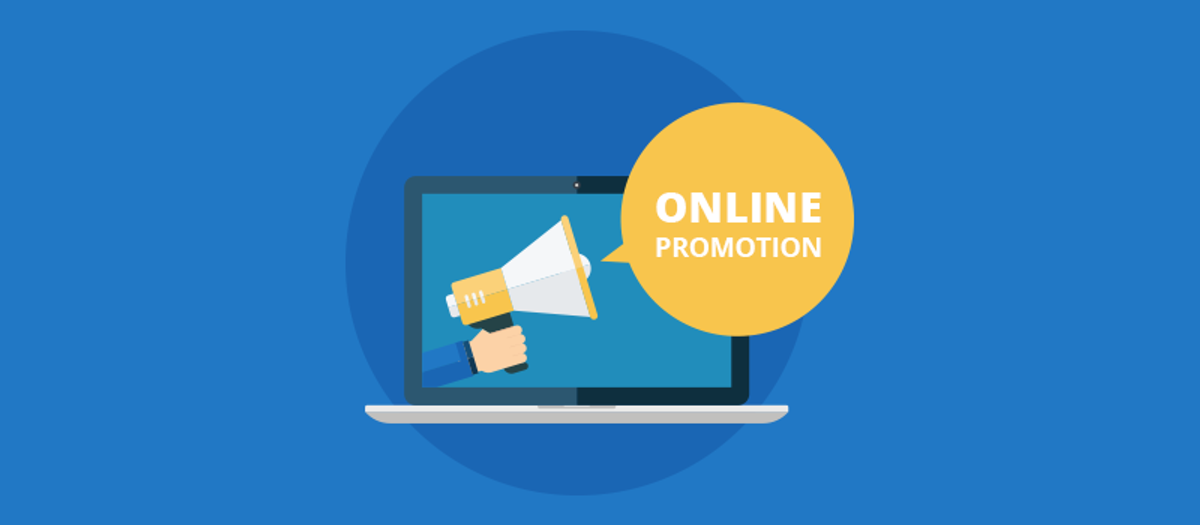
Online Promotions, when done right, can dramatically increase revenue and customer loyalty. Discover the campaign strategies that actually drive sales for your business.
Online promotions are one of the most powerful levers any business can pull to generate immediate revenue while simultaneously building the customer relationships that sustain long-term commercial growth. The businesses capturing the strongest returns from promotional campaigns are not running more promotions than their competitors.
They are running smarter ones, designed around specific commercial goals, delivered through precisely chosen channels, and measured against real revenue outcomes rather than vanity engagement metrics that look good in reports but do not translate to business growth.
Understanding how to design, execute, and optimize online promotions for measurable results is the commercial skill that separates businesses generating consistent revenue spikes from campaigns from those perpetually discounting without a clear return on the promotional investment they are making.
Why Strategic Online Promotions Outperform Random Discounting
The most common promotional mistake businesses make is treating promotions as a reflexive response to slow sales rather than a planned strategic tool for achieving specific commercial objectives. Random discounting without clear goals, defined audiences, or measurable success criteria trains customers to wait for sales before purchasing, erodes the perceived value of your products, and creates revenue patterns that are difficult to sustain or build upon over time.
HubSpot's marketing and sales research confirms that campaigns built around specific objectives, targeted audience segments, and clear conversion metrics consistently outperform broad promotional activity in both immediate revenue impact and long-term customer acquisition cost, validating the commercial case for strategic promotion design over opportunistic discounting.
High-Impact Online Promotion Types That Drive Measurable Revenue
Flash Sales and Time-Limited Offers
Flash sales create genuine purchase urgency by offering compelling discounts or exclusive access for a strictly limited time window. The psychological mechanism that makes them commercially effective is real scarcity combined with a clear, credible deadline that customers believe will not be extended if they do not act. This combination consistently produces higher conversion rates than permanent discounts of equivalent value because the time constraint activates purchase decisions that extended availability would postpone indefinitely.
Nielsen's consumer behavior research documents that limited-time offers produce measurable conversion rate increases across product categories by creating purchase motivation that standard pricing alone cannot generate, particularly for customers who have previously expressed interest in a product without completing a purchase at its regular price point.
Bundle Promotions and Value-Add Offers
Bundle promotions combine complementary products or services at a combined price that represents better perceived value than purchasing each item individually, increasing average transaction value while moving a higher volume of inventory across multiple product lines simultaneously.
Well-designed bundles serve the customer by offering genuine convenience and value, which is why they consistently produce better customer satisfaction outcomes than simple percentage discounts that reduce revenue without improving the customer's experience.
McKinsey's consumer purchasing research shows that personalized bundling that matches complementary products to individual customer purchase history and expressed preferences generates significantly higher average order values than generic bundle promotions designed without audience specificity.
Loyalty Program Promotions and Exclusive Member Offers
Promotions delivered exclusively to loyalty program members serve two commercial purposes simultaneously. They reward existing customer relationships in ways that increase retention and lifetime value, and they create visible incentives for non-members to join the loyalty program, expanding the enrolled customer base that generates your most consistent and predictable revenue streams.
Bain and Company's customer loyalty research documents that loyal customers consistently spend more per transaction, respond more frequently to promotional outreach, and generate higher lifetime value than comparable non-loyal customers, confirming that promotions designed to reward and deepen loyalty produce commercial returns that discount-driven acquisition promotions rarely match at equivalent investment levels.
Building a Promotional Calendar That Drives Consistent Revenue
Staying ahead of market trends in consumer purchasing behavior, competitive promotional activity, and seasonal demand patterns is what keeps your promotional calendar commercially relevant rather than reactive. Here is the framework for building a promotions strategy that generates consistent, planned revenue impact:
- Map your promotional calendar to known demand peaks: Identify the seasonal patterns, cultural events, and category-specific purchasing moments that drive elevated demand in your specific product areas, and build your most significant promotional efforts around these windows of naturally heightened customer purchase intent.
- Set specific revenue targets for each campaign: Define the revenue goal, the number of transactions required to reach it, and the minimum margin you will accept before designing any promotional offer, ensuring that profitability is protected from the beginning of the planning process rather than assessed only after results arrive.
- Segment your promotional audience deliberately: Not every promotion should reach every customer. Targeting promotions based on purchase history, browsing behavior, or loyalty tier consistently improves conversion rates and reduces promotional cost by concentrating your offer on the customers most likely to respond.
- Test one variable at a time: When experimenting with promotional formats, discount depths, or delivery channels, isolate a single variable per test so that performance differences can be attributed accurately and used to inform future promotion design with genuine confidence.
- Measure beyond topline revenue: Track the margin impact of each promotion, the proportion of promotional transactions that generate repeat purchases without subsequent discounting, and the net new customer acquisition rate to assess the full commercial value of each campaign.
Choosing the Right Channels for Your Online Promotions
Channel selection determines which customers see your promotion and in what context they encounter it, both of which significantly affect your conversion rate and your total promotional return on investment. A promotion that reaches the right audience in the right digital environment consistently outperforms a larger promotion budget spent reaching broadly through channels where your specific target customers are less engaged or less purchase-ready.
We Are Social's Digital 2024 Africa Report provides updates on digital channel engagement rates and consumer behavior across African markets, giving retail businesses current data on which platforms are driving the strongest purchase intent and transaction completion rates for their specific target demographics. Email remains particularly powerful for promotional delivery because subscribers represent an opted-in audience that has explicitly expressed interest in hearing from your business, producing open and conversion rates that cold audience channels consistently cannot match at equivalent spend levels.
Campaign Monitor's email promotions research documents the consistently strong return on investment that email promotional campaigns generate compared to other digital channels, particularly for businesses with established customer databases whose segment-specific behavior data enables high-precision promotional targeting.
Sprout Social's retail social media research offers additional channel performance intelligence specifically relevant to retail promotional campaigns, helping businesses allocate their promotional channel budget to the platforms that generate the strongest measurable purchase behavior among their target audiences.
FAQ: Online Promotions for Business Revenue Growth
How often should a business run online promotions? Promotion frequency depends on your margin structure and brand positioning. Most businesses find that three to six planned promotional campaigns per year, supplemented by smaller loyalty-focused offers, generate revenue uplift without training customers to expect perpetual discounts.
What is the minimum discount needed to drive promotional conversions? Effective discount depth varies by product category, customer segment, and competitive context. Testing different discount levels in controlled campaign conditions is more reliable than applying a universal minimum, as some audiences respond strongly to value-adds like free shipping or bonus products rather than percentage discounts.
How do I prevent promotions from permanently reducing my brand's perceived value? Keep promotional periods defined and limited, maintain your regular pricing visibly between promotions, and use value-add offers rather than price cuts as your primary promotional mechanism where your margin structure allows.
Can online promotions work for retail businesses with small customer databases? Absolutely. Small, well-targeted promotional campaigns delivered to engaged existing customers frequently outperform larger campaigns sent to less engaged broader audiences, making database quality more commercially valuable than database size for most promotional objectives.
How do I measure whether an online promotion actually increased my revenue? Compare the total revenue and transaction volume during the promotional period against an equivalent non-promotional period, accounting for seasonal variation, and calculate the net margin impact after deducting the promotional discount cost from the incremental revenue the campaign generated.
Every Promotion Should Earn Its Place in Your Calendar. Run Fewer. Run Better.
The businesses generating the strongest promotional returns are not the ones running constant campaigns. They plan each promotion deliberately, target it precisely, and measure its results rigorously before deciding whether to repeat, refine, or replace it. That discipline is what transforms promotional activity from a margin-eroding habit into a reliable, controlled revenue growth tool.
ThisIsBusiness360 is here to help you build promotional strategies that generate real revenue without giving away the margin your business works too hard to protect.
- Call us today: +234 806 496 8725
- Visit our website: www.thisisbusiness360.com