

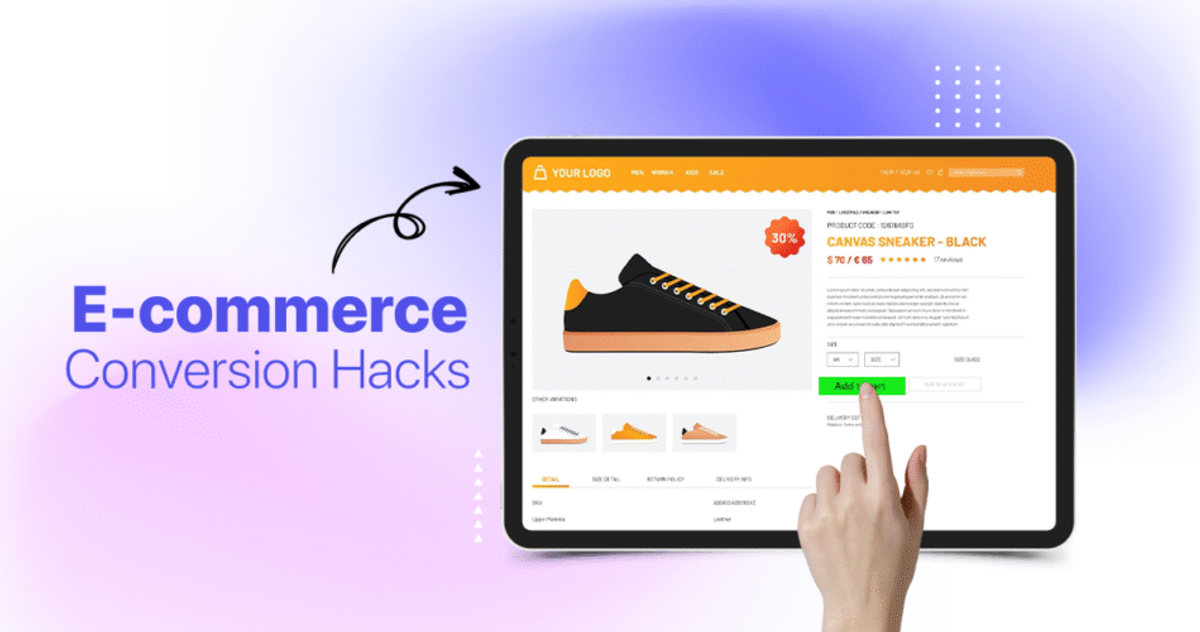
Learn how to build a retail website that converts visitors into loyal buyers with proven design, trust, and performance strategies that drive real results.
Your website is your most powerful salesperson, and it works around the clock without taking a break. A retail website that converts does not happen by accident. It is built with intention, structured for trust, and optimized to guide every visitor toward a confident buying decision. If customers land on your site and leave without purchasing, the problem is rarely your product. It is almost always your website experience. Here is how to fix that.
Why Most Business Websites Fail to Convert
Many business owners build websites focused entirely on appearance while overlooking the elements that actually drive sales. A beautiful design means very little if your pages load slowly, your navigation confuses visitors, or your calls to action are buried.
According to Google's research on page experience, sites that deliver fast, smooth, and mobile-friendly experiences rank higher and retain visitors significantly longer. Conversion begins the moment a visitor arrives, and every second of delay or friction increases the chance they leave without buying anything.
Essential Elements of a High-Converting Website
Speed and Mobile Performance
Website speed is not a technical detail reserved for developers. It is a direct conversion factor that affects every single visitor. Google PageSpeed Insights lets you test your site's performance for free and shows exactly what is slowing it down.
A one-second delay in page load time can significantly reduce conversions, particularly on mobile devices where most of your customers are browsing. Fixing speed issues is one of the fastest ways to recover lost sales without spending a single naira on advertising.
Clear Navigation and Site Structure
Visitors should never have to guess where to go next on your website. A clean, logical menu structure with clearly labeled categories guides customers effortlessly from landing page to product page to checkout. The Nielsen Norman Group's usability research confirms that confusing navigation is one of the primary reasons users abandon websites before completing a purchase. Keep your menu simple, limit top-level categories to the most important sections, and ensure every page has a clear next step that moves the visitor closer to buying.
Trust Signals That Reassure Buyers
Online shoppers hesitate when they feel uncertain about a business. Adding visible trust signals, including secure payment badges, return policies, and contact information, dramatically reduces that hesitation. The Baymard Institute's checkout research consistently shows that lack of trust is a leading cause of cart abandonment across e-commerce platforms globally. Display your physical address, phone number, and business registration details prominently. When customers feel safe, they complete purchases without second-guessing their decision.
Conversion-Boosting Strategies You Can Apply Today
Current market trends show that personalization and social proof are becoming non-negotiable elements of high-performing business websites. Here are practical steps to raise your conversion rate immediately:
- Write product descriptions that speak directly to your customers’ needs and desires rather than just listing features and dimensions.
- Add genuine customer reviews to every product page using platforms like Trustpilot to build social proof authentically.
- Use a single, prominent call-to-action button on each page rather than overwhelming visitors with multiple competing options.
- Simplify your checkout process by reducing steps and offering guest checkout to minimize drop-off at checkout.
- Optimize every product image for fast loading while maintaining high visual quality, since Shopify's conversion research identifies imagery as a major driver of purchase confidence.
Frequently Asked Questions
What makes a retail website convert well? A high-converting website combines fast load times, intuitive navigation, strong product visuals, clear calls to action, and visible trust signals. Each of these elements works together to reduce hesitation and guide visitors confidently toward completing a purchase without friction or confusion along the way.
How do I reduce cart abandonment on my website? Simplify your checkout process, offer multiple payment options, clearly display security badges, and send abandoned-cart email reminders to recover lost sales. The Baymard Institute reports that a streamlined checkout alone can recover a significant percentage of otherwise abandoned transactions.
Do I need a developer to improve my website's conversion rate? Not necessarily. Many improvements, such as rewriting product descriptions, adding reviews, improving your call-to-action buttons, and running speed tests through Google PageSpeed Insights, can be done without any technical expertise. Start with the no-code fixes first and bring in a developer only for structural or performance issues that require deeper work.
Build a Website Your Customers Actually Trust
Your website should work as hard as you do, bringing in customers, building confidence, and consistently closing sales. Every improvement you make to speed, structure, and trust directly translates into more revenue and fewer lost opportunities. The tools and strategies covered in this guide are available to you right now, and the businesses applying them are already seeing the results.
Ready to build a website that truly performs?
Call +234 806 496 8725