

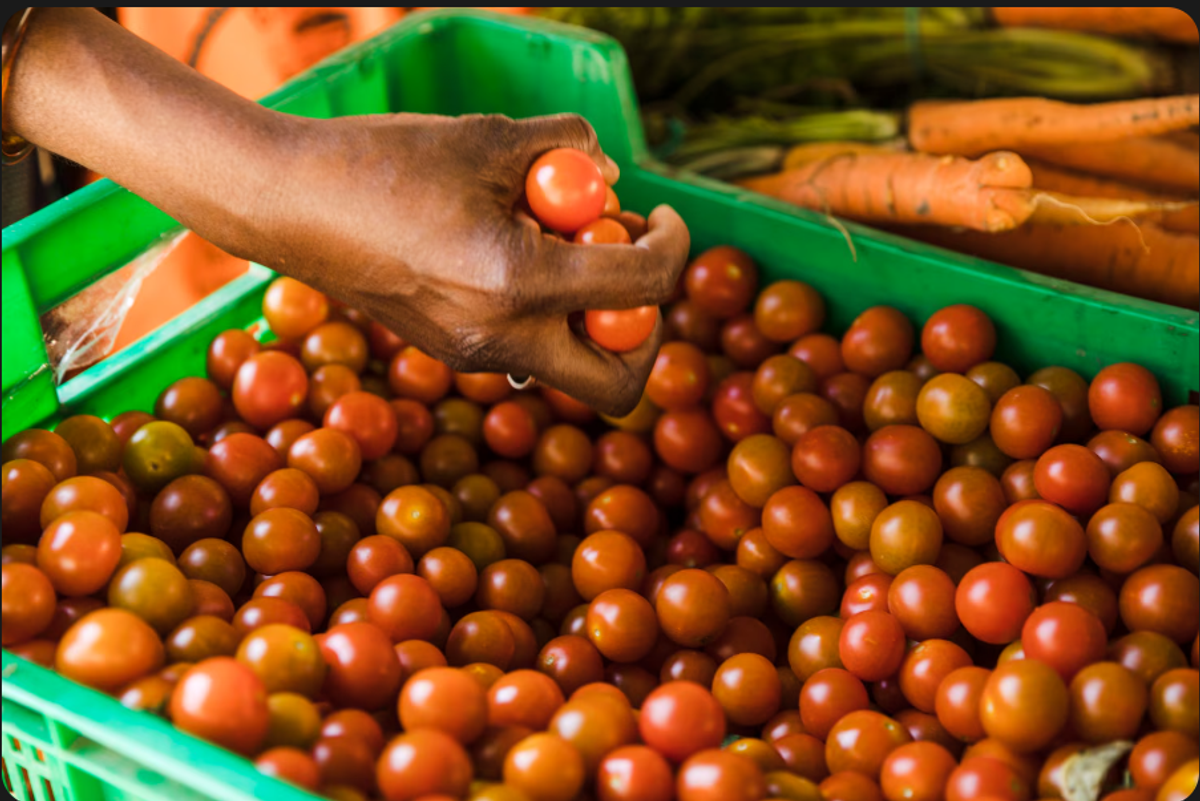
Africa's food market is heading for $1 trillion by 2030. Here's where the real investment opportunity sits and what businesses need to act on now.
The $1 trillion figure attached to Africa's food and agribusiness market by 2030 is frequently cited and routinely misunderstood. It does not mean Africa's agricultural GDP will reach that level. It represents the value of the entire food ecosystem: inputs, production, processing, storage, logistics, distribution, and food services, and the distinction matters commercially.
The opportunity is not in farming. It is in every stage between the farm and the consumer's plate, most of which remains underdeveloped, underfunded, and structurally misaligned with where demand is heading.
News: Nigeria's Money Supply Expands ₦16trn Year-on-Year as High Interest Rates Fail to Contain Liquidity
The Opportunity: A Sector Underperforming Its Own Potential
Agriculture employs more than half of Africa's workforce and contributed 17% of continental GDP in 2025, according to the AfDB's Annual Development Effectiveness Review 2026. That share has actually declined from 18% in 2020, not because the sector is shrinking but because productivity gains have not kept pace with the rest of the economy.
Cereal yields stand at roughly 1.68 metric tons per hectare, virtually unchanged since 2020 and less than half the global average of 4.2 metric tons. Africa produces significant quantities of food while simultaneously importing more than $80bn of it annually, a structural imbalance that makes the case for domestic investment more compelling than any projection.
The population math amplifies this. By 2050, the total food required to meet basic nutritional needs in Africa will rise to 558.7 million tonnes annually, up from 438.3 million tonnes in 2020. That 27% increase in demand must be met within a generation. The businesses and investors that build the supply-side infrastructure to meet it are not managing a development problem. They are capturing a commercial inevitability.
The Supporting Data: Where Capital Is Moving and Why
The most commercially important development in African agribusiness in 2025 was not a single deal. It was a structural shift in how investors are approaching the sector. The Kampala Declaration on Building Resilient and Sustainable Agrifood Systems, adopted in 2025, aims to mobilize $100bn in public and private investment by 2035, with 10% of national budgets allocated to agriculture and 15% of agrifood GDP reinvested annually. For investors, this is a policy signal that de-risks long-duration agricultural investments in ways that were absent from earlier frameworks.
Large agribusiness operators confirmed this direction with their own capital. Olam Agri expanded grains, rice and animal feed activities across Nigeria, Ghana and Tanzania in 2025, investing in storage and port-linked logistics. ETG Global strengthened oilseed and pulse networks connecting East African smallholders to Asian export markets. Brookings' April 2026 analysis found that vertically integrated agribusinesses have proven most effective, with investment surging from $12.1m in 2019 to $82.4m in 2022, as models that combine production, processing and distribution outperform single-point interventions.
The post-harvest loss figure sits at the center of both opportunity and failure. Up to 40% of food produced in Africa is lost due to poor post-harvest handling, primarily in storage, cold-chain logistics and transport. Eliminating even half of that loss would increase effective food supply without a single additional hectare under cultivation. Cold-chain infrastructure, grain storage, processing facilities and last-mile logistics are among the highest-return investment categories in African agribusiness precisely because the gap between what they deliver and what currently exists is so large.
The Risk of Inaction
The IMF's April 2026 Regional Outlook is explicit: a 20% increase in international food prices, entirely plausible given the Middle East conflict's effect on fertilizer and shipping costs, could push more than 20 million additional Africans into food insecurity. That humanitarian risk is also a business risk. Food inflation strains household budgets, compresses consumer spending across all categories, and destabilizes political conditions in fragile markets.
Businesses that depend on consumer purchasing power in markets where food takes 40-60% of household income are directly exposed to agricultural failure. And Africa's food import bill, currently over $80bn annually, represents capital leaving the continent that domestic production and processing investment could retain. African Union projections show that AfCFTA could raise intra-African agrifood trade by 60% by 2045, but only if processing capacity exists to move beyond raw commodity export.
Strategic Response: Three Positions Worth Taking Now
Climate-smart agriculture, drought-resistant seeds, solar irrigation, and precision farming tools address both the productivity gap and the climate vulnerability simultaneously. Markets including Morocco, Zambia, and Niger have demonstrated that these interventions reduce production volatility when deployed at scale.
Agro-processing is the highest-leverage commercial position available. Africa exports raw cocoa, cashews, sesame, and coffee at commodity prices and imports the processed equivalents at consumer prices. Investing in facilities that capture processing value domestically is simultaneously a food security intervention and a foreign exchange retention strategy. Countries are increasingly legislating local value-addition requirements, making early investment in processing infrastructure strategically aligned with where regulation is heading.
Digital-plus-analog distribution models are outperforming purely digital agritech approaches. Brookings identifies hybrid models combining technological innovation with physical touchpoints as most effective for reaching smallholders, who represent the majority of Africa's agricultural producers and will determine whether productivity gains are broadly distributed or remain concentrated at the commercial farm level.
For sector analysis, investment intelligence and business strategy across Africa's agribusiness opportunity, visit Business360.
Frequently Asked Questions
What is the $1 trillion African food market opportunity? It represents the projected value of Africa's entire food and agribusiness value chain by 2030, covering inputs, production, processing, storage, logistics, distribution and food services. Agricultural GDP alone will not reach $1 trillion; the figure encompasses every commercial activity between the farm and the consumer.
Why does Africa import food despite being an agricultural continent? Low productivity, inadequate post-harvest infrastructure, poor logistics and limited processing capacity mean Africa produces well below its potential. It loses up to 40% of what it does produce before it reaches consumers. The result is a continent with vast agricultural land that still spends over $80bn annually on food imports.
Which agribusiness sectors offer the strongest investment returns? Post-harvest infrastructure offers the most immediate commercial return because it addresses an existing loss problem with established demand. Agro-processing of high-value commodities, including cocoa, cashews, and sesame, is the next highest-leverage position, followed by climate-smart input supply and last-mile logistics.
How does AfCFTA affect agribusiness investment? AfCFTA is projected to raise intra-African agrifood trade by 60% by 2045, creating a market where processed food products can move across borders with reduced tariffs. This changes the investment case for processing facilities.
Call: +234 806 496 8725 Website: www.thisisbusiness360.com